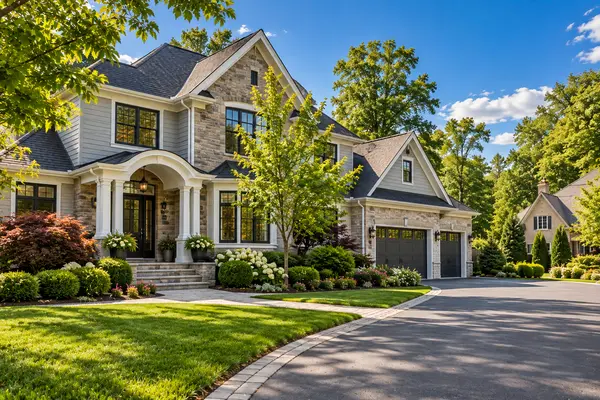
Selling Your Home in Norwood: Step-by-Step Guide
Selling your home in Norwood begins with a clear plan for pricing, preparation, disclosures, negotiations, and closing. A well-organized sale helps you protect your timeline and make decisions from a stronger financial position, whether you are moving up, relocating, or downsizing. Start by defining the proceeds you need, the condition work your home requires, and the terms you can realistically accept. Those choices should guide the entire selling process, from the first pricing discussion through the day you transfer the keys.
Norwood Home-Sale Market Snapshot for 2026
A property-specific review is more useful than broad market averages for a Norwood seller. Homes at different price points, in different conditions, and with different updates can attract very different levels of interest. Still, a few current figures help set expectations for this Bergen County borough:
- Average single-family sale price: about $1,003,000 over the 12 months ending June 2026, based on New Jersey MLS (NJMLS) data
- 2025 general property-tax rate: 2.892% of assessed value (the rate used to calculate tax bills)
- 2025 effective property-tax rate: 2.054% (the State of New Jersey's figure for comparing towns at full market value)
That average sits right at the $1 million line, which matters for sellers. Since July 10, 2025, New Jersey sellers pay a Graduated Percent Fee on sales above $1,000,000 (covered in the seller costs section below). These figures are a starting point for understanding the area's value range, but they are not a substitute for comparable closed sales and current competing listings.
What the Norwood Market Looks Like Right Now
The Norwood market should be evaluated by the active listings and recent closed sales most comparable to your home, not by a single market label. Sellers can encounter different conditions depending on property type, condition, lot appeal, updates, and price range.
For homes above $800,000, buyers tend to compare details closely. Renovation quality, roof and mechanical-system age, kitchen and bath condition, finished space, layout, outdoor usability, and presentation can all influence showing activity and negotiation strength. A move-in-ready home that is priced in line with its direct competition can earn early attention, while a home that asks buyers to overlook visible maintenance or an aggressive price gap may need more time.
The local housing stock also makes condition a meaningful part of pricing. Many homes have been updated in stages, so buyers often distinguish between cosmetic refreshes and substantial work to major systems or layouts. Sellers should compare their property against homes that are currently available, recently went under contract, sold, expired, or were withdrawn. Looking through what is currently listed in Norwood shows you the real alternatives a buyer sees when your home hits the market.
Selling your home in Norwood is therefore less about trying to predict one universal market direction and more about positioning your home clearly within its own comparison set. A credible launch price, complete property information, polished presentation, and practical terms give sellers the best chance to create momentum when the listing first reaches buyers.
Step 1: Decide When to Sell and Whether You're Ready
You are ready to sell when your personal timeline, expected proceeds, and property-preparation plan can work together without forcing rushed decisions. Buyer activity can shift through the year, but a well-presented Norwood home can compete in any season when the price and launch plan match current alternatives.
Start with the financial questions. Can you estimate your mortgage payoff, transfer charges, legal expenses, moving costs, and the funds needed for your next housing decision? Can you carry the home if the transaction takes longer than planned? Have you decided whether selling first, buying first, or using temporary housing best fits your situation?
Then consider readiness at the property. Can visible repairs be completed, records for substantial improvements be assembled, and the home be kept available for showings? In higher-value price ranges, buyers regularly compare condition and presentation alongside square footage and bedroom count. Deferred maintenance can affect confidence and create leverage for buyers during negotiations.
Before choosing a launch date, review the homes competing most directly with yours. Browsing recently closed sales gives you an additional reference point for organizing timing and financial decisions. The right moment to list is when your home, your next-step plan, and your pricing evidence are aligned.
Step 2: Price Your Home to Sell, Not Just to List
The right Norwood list price is supported by comparable sales, current competition, condition, and your preferred timeline. It is not simply the highest number that may appear possible.
A comparative market analysis should evaluate nearby closed sales alongside active and pending listings. For a Norwood property, that means accounting for renovation quality, lot characteristics, living area, bedroom and bath count, garage configuration, finished lower-level space, and visual presentation. Comparable properties should be genuinely similar, not simply located nearby.
Overpricing can weaken a listing's first impression. When a home begins beyond what buyers can justify against alternatives, it may receive fewer qualified showings and remain exposed after the most active early buyers have moved on. Later price reductions can help, but they do not always recreate the attention available during the initial launch period.
Pricing near credible market evidence can encourage more serious buyer consideration and provide a defensible position in negotiations. Sellers focused on a faster sale may choose a price that clearly distinguishes the home from competing inventory. Sellers seeking the strongest possible net proceeds may leave reasonable negotiating room, while still keeping the home within a range buyers and lenders can support.
If your likely sale price lands just above $1,000,000, run the numbers on both sides of that line. A sale of $1,050,000, for example, triggers a 1% Graduated Percent Fee on the full price, or $10,500, on top of the standard Realty Transfer Fee. Knowing that cost before you set a list price helps you judge whether a slightly higher number truly improves your net.
A home valuation request provides a place to organize comparable sales, active inventory, and condition adjustments before selecting a final asking price. The goal is not to price low or high by default. It is to price deliberately for the result you need.
Common Pricing Mistakes in Norwood
- Anchoring the list price to an automated estimate instead of comparable sales and the home's real condition.
- Ignoring differences in updates, maintenance, lot appeal, and layout when comparing nearby properties.
- Launching above the competitive range without a clear response plan if buyer interest is limited.
- Focusing only on offer price instead of credits, financing strength, timing, and closing certainty.
Step 3: Prepare Your Home - What Moves the Needle
The preparation work that usually matters most is correcting visible repair issues, deep cleaning, simplifying the presentation, and making selective cosmetic updates. Buyers often form a strong opinion quickly when they see signs of deferred maintenance.
Start with repairs that demonstrate care and functionality. Address leaks, damaged trim, loose railings, cracked flooring, nonworking fixtures, and other conditions that can make a home feel neglected. Then focus on broad-appeal improvements such as neutral paint, refreshed lighting, clean grout, updated hardware, and straightforward curb-appeal work.
Large custom renovations are not always the best pre-sale investment. A seller can spend heavily on finishes that do not match the preferences of the eventual buyer. Industry research published in 2025 found that real estate professionals most often recommend whole-home painting, painting a single interior room, and roofing work before listing.
Staging is particularly useful when furniture hides room size, a layout needs clarification, or a vacant home needs warmth and scale. Deep cleaning, decluttering, and professional photography should follow repair work, not replace it.
Before listing, consider a pre-listing inspection to identify conditions that may later become negotiation points. Buyers may focus on roofing, drainage, electrical systems, plumbing, heating and cooling equipment, foundations, and evidence of water intrusion. Gather permits, warranties, invoices, and service records early so buyer questions can be answered with clear documentation.
Seller Costs: What to Expect at Closing in Norwood
Norwood sellers should plan for negotiated brokerage compensation, New Jersey transfer charges, legal fees, mortgage payoff items, tax adjustments, and any buyer credits accepted in the contract. New Jersey assigns statutory responsibility for both the Realty Transfer Fee and the Graduated Percent Fee to the seller. State transfer-fee rules below were reviewed in October 2026, and sellers should confirm their transaction-specific amount with the state schedule and their attorney.
| Cost item | Typical range or rate | Who pays | Notes |
|---|---|---|---|
| Brokerage compensation | Negotiated in the listing agreement | Seller / negotiable | Review compensation and any buyer-side concession strategy before listing. |
| New Jersey Realty Transfer Fee | Graduated state fee | Seller | The amount depends on consideration, property classification, and eligibility for exemptions. |
| Graduated Percent Fee | 1% of the full price for sales over $1M up to $2M; 2% over $2M up to $2.5M; 2.5% over $2.5M up to $3M; 3% over $3M up to $3.5M; 3.5% over $3.5M | Seller | Applies to deeds recorded on or after July 10, 2025. Before that date, this was a 1% fee paid by the buyer. |
| GIT/REP estimated income tax | Varies | Seller (if not a New Jersey resident at closing) | Relocating sellers who will no longer be New Jersey residents may need to make an estimated income tax payment at or before closing. |
| Attorney fees | Varies by attorney and transaction complexity | Seller | Attorneys commonly assist with contract review, disclosures, and closing documents. |
| Title-related payoff items | Varies | Seller / negotiable | May include lien satisfaction, mortgage payoff, and recording-related items. |
| Prorated property taxes | Varies by closing date | Seller / negotiable | Taxes are typically adjusted based on the ownership period. |
| Home warranty | Optional | Seller / negotiable | A warranty may be offered during negotiations. |
| Seller concessions or credits | Negotiated | Seller / negotiable | Evaluate credits against the full offer and expected net proceeds. |
New Jersey's Realty Transfer Fee information explains the state charges and exemptions, and the Division of Taxation's Graduated Percent Fee notice lays out the rates for higher-value transfers.
Step 4: Navigate Disclosures and Legal Requirements
New Jersey sellers must disclose known material property conditions accurately and complete required documents carefully. The purpose is not to present a home as flawless. It is to provide prospective buyers with clear information about known conditions that could affect value, safety, or use.
State law requires sellers of residential property to use the official Seller's Property Condition Disclosure Statement, which covers structural components, systems, utilities, environmental conditions, and land issues. All sellers must also complete a separate Flood Risk Addendum that asks about flood zones, flood history, past flood damage, and flood insurance. The form makes clear that sellers remain responsible for known material defects even if an issue is not specifically listed. Both current forms are posted by the New Jersey Division of Consumer Affairs, and they deserve a careful review before signing.
Gather records early. Helpful documentation can include permits, invoices for major improvements, warranties, prior repair records, utility information, and paperwork related to known property conditions. Organized records can reduce avoidable delays and give buyers clearer answers.
Incomplete or inaccurate disclosures can lead to disputes after contract. If you are uncertain whether a condition is material, discuss the facts with your attorney rather than making assumptions. New Jersey transactions commonly involve attorney review and legal support through closing, making early legal guidance useful for disclosure obligations, contract language, and transaction documents.
Step 5: Review Offers and Negotiate Effectively
A competitive Norwood offer combines a credible price with terms that fit your timing, risk tolerance, and expected proceeds. The highest headline price is not always the strongest outcome.
Review the full offer package. Consider the buyer's financing strength, earnest-money deposit, requested contingencies, closing date, personal-property requests, and proposed credits. A higher price paired with substantial credits, uncertain financing, or broad contingencies may create a less reliable net result than a slightly lower offer with cleaner terms.
When multiple offers arrive, compare them side by side. Identify which buyer is most likely to close without major changes to price or terms. Escalation clauses require careful review, including the maximum amount, the evidence required for competing offers, and the process for confirming that another offer triggered the escalation. If an escalation could push the price past $1,000,000, factor in the Graduated Percent Fee before you accept.
A counteroffer can improve price, timing, credits, possession terms, or other priorities. It can also give a buyer time to reconsider, so sellers should know which terms are essential before responding. Sellers generally have the strongest leverage when the home is newly listed, well presented, accurately priced, and receiving credible interest.
Keep negotiations centered on what matters for your move: closing certainty, timing, acceptable risk, and estimated proceeds. A disciplined comparison of all terms helps prevent a decision based on price alone.
Step 6: Move From Contract to Closing
After an offer is accepted, the transaction moves through attorney review, buyer due diligence, financing, title work, and closing preparation. New Jersey broker-prepared residential contracts include a three-business-day attorney review period, counted from delivery of the fully signed contract and excluding weekends and legal holidays. During that window, either side's attorney can disapprove the contract or propose changes before it becomes binding.
During the buyer's due-diligence period, repair requests or condition concerns may arise. Sellers can agree to complete work, offer a credit, provide supporting documentation, negotiate another solution, or decline a request. The best response depends on cost, timing, contract terms, and the likelihood of finding another buyer.
The buyer's lender will also evaluate the property and transaction. If the lender's value conclusion does not support the contract price, the parties may renegotiate, the buyer may bring additional funds, or the agreement may end if its terms allow.
Title work confirms ownership and identifies liens or other matters that must be resolved before the deed transfers. Near closing, the buyer completes a final walkthrough to confirm the home remains in the agreed condition. New Jersey closings commonly involve attorneys, the lender, title professionals, and both parties, so prompt responses to document requests can help keep the timeline moving.
Your Net Proceeds: A Simple Framework
Pro Tip
- Start with the agreed sale price.
- Subtract the mortgage payoff and any recorded liens that must be cleared.
- Subtract negotiated brokerage compensation, the Realty Transfer Fee, any Graduated Percent Fee, legal costs, and other closing charges.
- Subtract buyer credits, repair agreements, and other concessions accepted in the contract.
- Keep a separate allowance for moving, temporary housing, and your next purchase.
The IRS allows eligible homeowners to exclude up to $250,000 of gain on a primary residence, or up to $500,000 for married couples filing jointly, when the ownership and use tests are met. If the sale may produce taxable gain, such as when you may not satisfy those tests, discuss your circumstances with a qualified tax professional.
Thinking About Selling Your Home in Norwood?
Selling your home in Norwood is more manageable when pricing, preparation, disclosures, and contract terms are addressed in the right order. Homelynx Realty LLC is a licensed, boutique brokerage that brings local market knowledge and a data-driven approach to pricing and launch planning, with personal guidance from the first conversation through closing. If you would like a property-specific look at your home's value and likely proceeds, reach the team at +1 (201) 771-8342 or homelynxrealty@gmail.com, or book a time to talk.
Frequently Asked Questions
How long does it take to sell a home in Norwood right now?
The timeline depends on price, condition, buyer demand, financing, and contract terms. A home that is positioned credibly can attract serious interest early, while a listing that starts beyond comparable evidence may require more time and adjustments. After acceptance, allow time for the three-business-day attorney review period, buyer due diligence, financing, title work, and closing.
What are the total costs of selling a home in Norwood?
Selling costs can include negotiated brokerage compensation, New Jersey Realty Transfer Fee charges, a Graduated Percent Fee of 1% to 3.5% on sales above $1,000,000, attorney fees, mortgage payoff, tax adjustments, and buyer credits. With Norwood's average single-family sale price near $1 million, many sellers will want to check whether that fee applies. Your actual total depends on the sale price, loan balance, exemptions, and negotiated contract terms, so prepare a net-proceeds estimate before committing to a final list price.
Do I need an attorney to sell a home in Norwood?
New Jersey residential transactions commonly involve attorneys, and broker-prepared contracts include an attorney-review clause. An attorney can help review contract terms, disclosures, title matters, and closing documents. Legal guidance can clarify responsibilities before the agreement becomes binding.
Should I sell before I buy my next home, or buy first?
Selling first often gives you a clearer view of available proceeds and reduces the risk of carrying two properties. Buying first can provide more control over your move, but it may require greater financial flexibility and a backup housing plan. The better route depends on your equity, financing, timeline, and comfort with temporary housing.
What is the best time of year to sell a home in Norwood?
The strongest time to list is when your home is prepared, your next-step plan is clear, and your price is supported by current comparable inventory. Buyer activity can vary throughout the year, but accurate positioning and polished presentation often matter more than waiting for a particular month. Review active competition before selecting a launch date.
Categories
Recent Posts