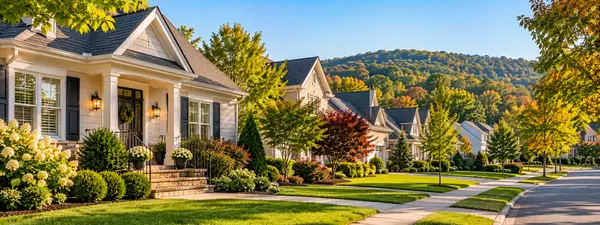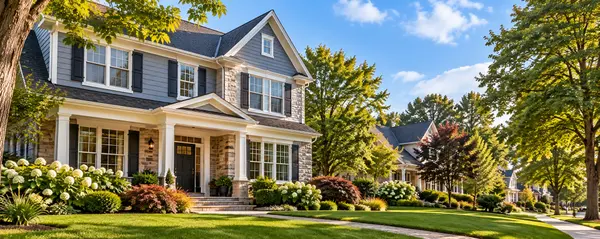
Selling Your Home in Closter, NJ
Selling your home in Closter, NJ means entering one of Bergen County's most competitive and high-value markets, where well-prepared sellers are achieving above-asking results and homes priced at the $800,000-and-above tier continue to attract serious, qualified buyers.
This guide walks through every stage of the Closter selling process, from understanding current market conditions to preparing your property, pricing it accurately, and negotiating through to closing.
Why Closter Remains One of Bergen County's Strongest Seller Markets
Bergen County's single-family median sales price reached $949,500 in July 2026, up 8.5% year over year, and Closter's premium runs even sharper, with listing prices in the 07624 zip code trending in the $1.3M to $1.4M range through mid-2026 (aggregated MLS listing data, Bergen County single-family segment, three months ending July 2026, published August 17, 2026). Homes sold in an average of 26 days countywide and achieved 104.6% of original list price, while inventory held at just 2.6 months of supply, well below the five-to-six months that characterizes a balanced market.
Closter is widely regarded as one of Bergen County's most desirable communities, and three factors underpin that sustained buyer demand:
- School quality: The Closter Public School District serves grades PK through 8, and high school students attend Northern Valley Regional High School at Demarest, one of Bergen County's strongest academic institutions. Buyers relocating from New York City consistently prioritize these schools, and that demand underwrites values across the entire price spectrum.
- Commute access: NJ Transit bus service connects Closter to Midtown Manhattan in approximately 50 minutes. For buyers who find equivalent Bergen County towns at higher price points, Closter represents both a practical and lifestyle-driven choice.
- Limited inventory: New listings in Bergen County's single-family market have grown modestly but not fast enough to relieve pricing pressure. Scarcity continues to support values, particularly for turnkey and updated properties.
Understanding these drivers is the first step in building a selling strategy, because your home's value is rooted in what buyers in this market are actually paying for.
How to Price Your Closter Home to Maximize Your Net Proceeds
Pricing is the single most consequential decision a Closter seller makes. Price too high, and your listing sits while better-positioned competitors absorb buyer attention. Price at or just below market, and you create the conditions for competitive offers.
The Bergen County data makes the pattern clear. In July 2026, sellers countywide averaged 104.6% of list price, meaning buyers routinely bid above asking on properties that entered the market correctly positioned (aggregated MLS listing data, three months ending July 2026, published August 17, 2026). The listings that did not achieve those results were largely the ones that opened too high, triggering price reductions that erode both value perception and buyer urgency.
For homeowners in the $800,000-and-above segment, three inputs matter most when establishing your price:
| Pricing Factor | What to Analyze |
|---|---|
| Comparable sales, not listings | Active listings are your competition; closed sales are the market's verdict. Review recently sold homes in Closter from the past three to six months, adjusting for lot size, condition, bedroom and bathroom count, and proximity to transit. |
| Upgrade weighting | Open floor plans, home offices, high ceilings, outdoor entertaining spaces, and smart home technology command measurable premiums with today's upper-tier buyers. Kitchen renovations and primary suite expansions typically move the needle more than cosmetic updates alone. |
| Days on market as a signal | If comparable properties sold in under 30 days, demand is outpacing supply in your price tier. If they sat for 60 or 90 days before closing, buyers have leverage and your price needs to reflect that reality from day one. |
A professional comparative market analysis, grounded in recent Closter transactions, gives you the most reliable starting point. You can request a no-obligation valuation through our home valuation page to begin that process.
Preparing Your Home: What Closter Buyers Notice First
The highest-return pre-listing investments for Closter sellers are curb appeal, deferred maintenance repair, and kitchen or primary suite staging, not full renovations. Buyers touring homes in the $800,000-and-above range arrive with detailed checklists and high standards, and the properties that generate the strongest offers are invariably the ones that feel move-in ready from the first step through the door.
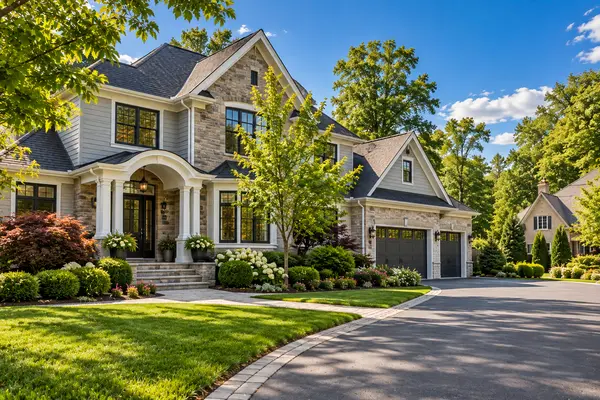
Curb appeal sets the tone before the showing begins. A freshly painted front door, trimmed landscaping, clean walkways, and well-maintained exterior siding create immediate confidence. In a market where buyers may be viewing multiple homes in a single afternoon, first impressions carry real weight.
Natural light and cleanliness drive emotional responses. Bright, clean spaces feel larger and more welcoming. Open blinds and curtains before every showing, replace any burnt-out bulbs, clean windows inside and out, and address any odors. Neutral, fresh-smelling spaces tend to extend buyer viewing time and reduce the instinct to negotiate on condition.
The kitchen and primary suite close deals. These two spaces receive the most buyer attention. Clear countertops, updated hardware, and fresh accessories in the kitchen can shift perception significantly without requiring a full renovation. In the primary suite, decluttered closets and clean, spa-like staging help buyers envision daily life in the home.
Deferred maintenance signals risk. Small issues, such as peeling paint, dripping fixtures, loose hardware, and cracked caulk, are not simply cosmetic. To a buyer, they raise questions about what else may have been deferred. Addressing these items before listing costs relatively little and removes a common objection before it arises.
Storage communicates livability. Organized closets, pantries, and garage space help buyers visualize their own belongings in the home. Removing excess items from storage areas before listing is one of the highest-return preparations a seller can make.
Marketing Your Closter Home: How Presentation Determines Results
In Closter's upper-tier market, professional photography, MLS placement, and targeted digital promotion are the three pillars that determine how many qualified buyers schedule showings and how quickly offers arrive.
Buyers in this segment are typically represented by experienced buyer's agents and are actively comparing your property against similar listings across Bergen County. The quality of your marketing directly influences offer volume and competitiveness.
Professional photography is essential. Poorly lit or low-resolution listing photos are easy to spot, and they signal to buyers that a property is not being taken seriously. Wide-angle, professionally lit photography, including twilight exterior shots for homes with strong curb appeal, consistently increases listing views and showing volume.
Video and 3D walkthroughs extend your reach. Buyers relocating from New York City and out-of-state destinations frequently begin their Closter search online, often months before visiting in person. Immersive video walkthroughs and 3D tours allow remote buyers to engage deeply with your property before scheduling an in-person visit, which often converts directly into an offer.
Targeted digital distribution complements MLS exposure. MLS placement reaches every active buyer's agent in the region. The most effective listing campaigns layer in targeted social media promotion, email outreach to qualified buyer databases, and placement on channels that reach relocation-focused and high-net-worth buyer segments.
Open house strategy creates momentum. A well-promoted broker open house in the first week builds agent awareness and word-of-mouth referrals. A public open house in the first weekend, combined with strong online visibility, creates the sense of urgency that supports multiple-offer situations.
For a real-time view of current Closter market conditions, including active inventory levels and recent price trends, our local market snapshot provides regularly updated context.
Navigating Offers and the Path to Closing
When offers arrive, the highest number is not always the strongest position. Closter sellers who understand offer structure make better decisions and face fewer surprises between contract and close.
Key Offer Terms Beyond Purchase Price
- Contingencies and their timelines: Mortgage financing contingencies and related financial review periods are standard in New Jersey transactions. Understanding what contingency periods are included in each offer, how long they run, and whether any have been waived by particularly well-qualified buyers helps you compare offers accurately.
- Closing date and possession terms: If you need time to relocate, complete a move, or close on a replacement property, the flexibility built into your contract timeline can matter as much as the price itself. Some buyers will pay a premium for a seller-friendly closing schedule.
- Buyer qualification: Pre-approval letters are not created equal. A cash offer or a fully underwritten pre-approval carries substantially less transaction risk than a standard pre-qualification. Review the strength of each buyer's financial position carefully with your agent before accepting.
- Escalation clauses: In competitive offer situations, buyers often submit escalation clauses that automatically increase their bid against competing offers up to a stated ceiling. Understanding how to evaluate and respond to escalation provisions protects your negotiating position.
Attorney Review Period
New Jersey operates under an attorney review period that follows contract signing, typically three business days during which either party's attorney may review, modify, or void the agreement. This is a standard protection built into every NJ residential transaction. New Jersey Realtors® publishes guidance on seller disclosure requirements and agency obligations under the 2024 legislation through the New Jersey Realtors® Consumer Protection Enhancement Act resource page, which covers what sellers must disclose and how the law affects the transaction process. Reviewing that resource alongside your attorney is a useful step before you go to contract.
Seller's Property Condition Disclosure
New Jersey also requires sellers to complete a Seller's Property Condition Disclosure Statement, informing buyers of known material conditions affecting the property. As of August 1, 2024, under the Real Estate Consumer Protection Enhancement Act, this signed disclosure must be provided to the buyer before they become obligated under any purchase contract. The official form and instructions are published by the New Jersey Division of Consumer Affairs. Thoroughness and accuracy in this disclosure protects you after closing and reduces the likelihood of post-sale disputes.
For sellers coordinating a Closter sale with the purchase of their next home, our seller information guide covers the planning process in further detail. If you have questions about current buyer activity or wish to discuss a customized sales strategy for your home, feel free to contact our team directly.
Frequently Asked Questions: Selling a Home in Closter, NJ
-
How long does it typically take to sell a home in Closter, NJ?
Bergen County's single-family segment averaged 26 days on market in July 2026 (aggregated MLS listing data, three months ending July 2026, published August 17, 2026), and Closter homes that are well-prepared and correctly priced tend to perform at or ahead of that pace. Listings that enter the market overpriced, however, routinely spend 60 days or more before sellers accept reductions, so preparation and accurate pricing have a direct impact on total time to close.
-
What is the best time of year to sell a Closter home?
Spring, running roughly from March through June, historically produces the strongest buyer traffic and offer activity across Bergen County. That said, Closter's core demand drivers, including school quality, commuter access, and constrained inventory, have historically supported year-round buyer activity, with fall and winter sometimes offering less competing inventory than the spring peak. Sellers who list outside the peak spring window often face fewer competing properties, which can work in their favor even when overall buyer volume is seasonally lower.
-
How do I estimate my net proceeds before selling?
Net proceeds depend on your sale price, outstanding mortgage balance, seller-side closing costs (real estate commission, New Jersey transfer taxes, attorney fees, and any credits offered to the buyer), and the cost of any pre-listing repairs or improvements. A detailed net sheet calculated with your specific numbers and current market comparables gives you the clearest picture before you commit to a listing date. You can request an initial calculation through our home valuation request page to begin building that estimate alongside your agent.
-
Do I need to renovate before listing my Closter home?
Extensive renovations rarely return their full cost in additional sale price, particularly at the upper end of the market. The highest-return pre-listing investments are typically thorough cleaning, deferred maintenance repair, fresh neutral paint where needed, and professional staging. Kitchen and primary suite improvements can add value, but their impact depends on how your home compares to active competition, an assessment best made with your agent after reviewing current comparables.
-
Why do some well-priced Closter homes still sit on the market?
Correct pricing is necessary but not sufficient. A home set at market value but presented with weak photography, limited digital distribution, and no open house strategy will still underperform relative to its potential. Closter's upper-tier market rewards sellers who invest in both presentation and promotion, not just those who set the right number.
Categories
Recent Posts